Lemon & thyme
Rub the finely grated yellow zest into the sugar until it smells of lemon. Strip a few thyme tips and chop them fine so a whole leaf never dominates a bite.
 Dessert wheel ↗
The baking collection
A fork-pricked finger is lovely just as it is. For another batch, rub lemon zest into the sugar, roll the edges in pistachios, or take the butter in a savory direction with Parmesan and black pepper.
Start with what’s in the cupboard. Find ideas for flavoring the dough, coating the edges, or finishing the baked biscuit.
Rub the finely grated yellow zest into the sugar until it smells of lemon. Strip a few thyme tips and chop them fine so a whole leaf never dominates a bite.
Chop dried cranberries small enough to slice through. Pair them with orange zest for a fragrant dough dotted with chewy, tart pockets.
Chop dried sour cherries and toasted almonds to a similar size. Slice the chilled dough across the log to show the red cherries against the pale nuts.
Work lime zest into the sugar. After baking, dip a corner in white chocolate and touch it to toasted coconut while the chocolate is still soft.
Mince rosemary for the dough, then sandwich two small rounds around tart apricot jam. Fill close to serving if you like a crisp biscuit.
Crush green cardamom seeds finely for the dough. Roll the log in chopped pistachios before chilling so each coin has a narrow green rim.
Toast the hazelnuts, cool them, then chop. Dip a baked finger lengthwise in milk chocolate and scatter the nuts along the seam.
Cut a dried date into tiny pieces and press one into each walnut-topped round. A little chewy fruit is enough against the dry, toasty nut.
Use a mix of crushed and whole black sesame seeds in the dough. A little orange zest lifts the roasted flavor and the whole seeds give a slight crunch.
Finely chop toasted pecans for the center. Dust the warm biscuit with maple sugar to put the maple aroma right where you take the first bite.
Grind a small pinch of Earl Grey leaves almost to a powder before adding them to the flour. Finish with lemon sugar to carry the tea’s bergamot aroma.
Dice crystallized ginger very finely so a slice will hold together. Use lime zest in the dough for a fresh top note above the ginger’s heat.
Lightly crush the seeds, leaving a few visible specks. Orange zest brings sweetness to the anise flavor. Try thin rounds with black coffee.
Scent the dough with cardamom. Brush a little rosewater icing onto one edge of the cooled rounds so you can taste the butter before the floral finish.
Give the dough just a pinch of cinnamon and press sliced almonds onto the surface. Bake a thin sheet and cut it into fingers while warm.
Whisk instant espresso powder through the flour so there are no bitter clumps. Shave dark chocolate into the dough for fine streaks that slice cleanly.
Dip just the tip of each baked finger into dark chocolate. Add a few flakes of salt before it sets and leave the other end bare for contrast.
Brush a thin layer of white chocolate over a baked round. Crush freeze-dried raspberries over the wet chocolate for a tart pink finish.
Fold a small handful of nibs into mandarin-scented dough. Their crunchy bitterness keeps the sweet peel from tasting like marmalade.
For millionaire’s shortbread, start with a baked slab. Give the caramel layer time to set before adding the chocolate so each square shows three distinct layers.
Spread blackcurrant preserve between small vanilla rounds. Leave a slim border so the filling comes just to the edge when you press.
Bake small rounds with poppy seeds in the dough. Just before serving, spoon a dab of cold lemon curd onto each for an open-faced biscuit.
Lay a piece of baked ginger shortbread across a glass of tart rhubarb compote. Break it in as you eat for alternating spoonfuls of fruit and crunch.
Slice a ripe pear into a shallow bowl with a spoonful of crème fraîche. Crumble a plain shortbread finger coarsely over the top at the table.
Loosen thick fig jam with a drop of orange blossom water, tasting as you go. Spread it on one side of a small biscuit and serve open-faced.
Start with a cheese shortbread dough for these aperitif biscuits. Nigella Lawson’s Parmesan version uses flour, butter, grated cheese and egg yolk. Get the savory dough recipe.
Add finely ground black pepper to a Parmesan dough. Slice it into small coins and grind a little extra pepper over the tops before baking.
Use a mature cheddar shortbread recipe and sift mustard powder into its flour. A thin slice of tart apple alongside makes a good first bite.
Fold lightly crushed caraway into a Gruyère biscuit dough. Serve the cooled rounds with crisp radishes so the cheese and spice have a fresh counterpoint.
Bake rosemary-scented Parmesan coins. Top each with a sliver of drained green olive just before serving to keep the biscuit crisp.
Dust a cheese shortbread lightly with smoked paprika. Serve with shavings of Manchego and a wedge of quince paste for a salty, smoky, sweet bite.
The familiar ratio is three parts flour, two parts butter and one part sugar by weight. Here’s a small batch of thin fingers, adapted from Lulu Grimes’s Good Food recipe.
Baking a thick round or a whole slab? Use a pan-shortbread method with a longer bake. The timing above is for individual 5 mm fingers.
Choose something to sip, spoon or spread alongside the biscuits you have.
Pour strong black tea and put a spoonful of blackcurrant jam on the side. Try a bite plain, then one with just a dab of jam for tartness.
Serve with a small bowl of strawberries and unsweetened whipped cream. Break the biscuit over the cream just before eating.
Set an almond or pistachio biscuit beside a cold lemon posset. A clean snap and a silky spoonful make a good two-part dessert.
Try a small espresso with dark chocolate, or fresh raspberries with white chocolate. Both give a sweet biscuit a sharper finish.
Put out thin apple slices, radishes and cornichons. Keep them beside the biscuits so guests can add a crisp or pickled bite at the table.
Scatter the bigger pieces over baked pears. Save fine crumbs for the last layer on a glass of vanilla ice cream and warm sour cherries.
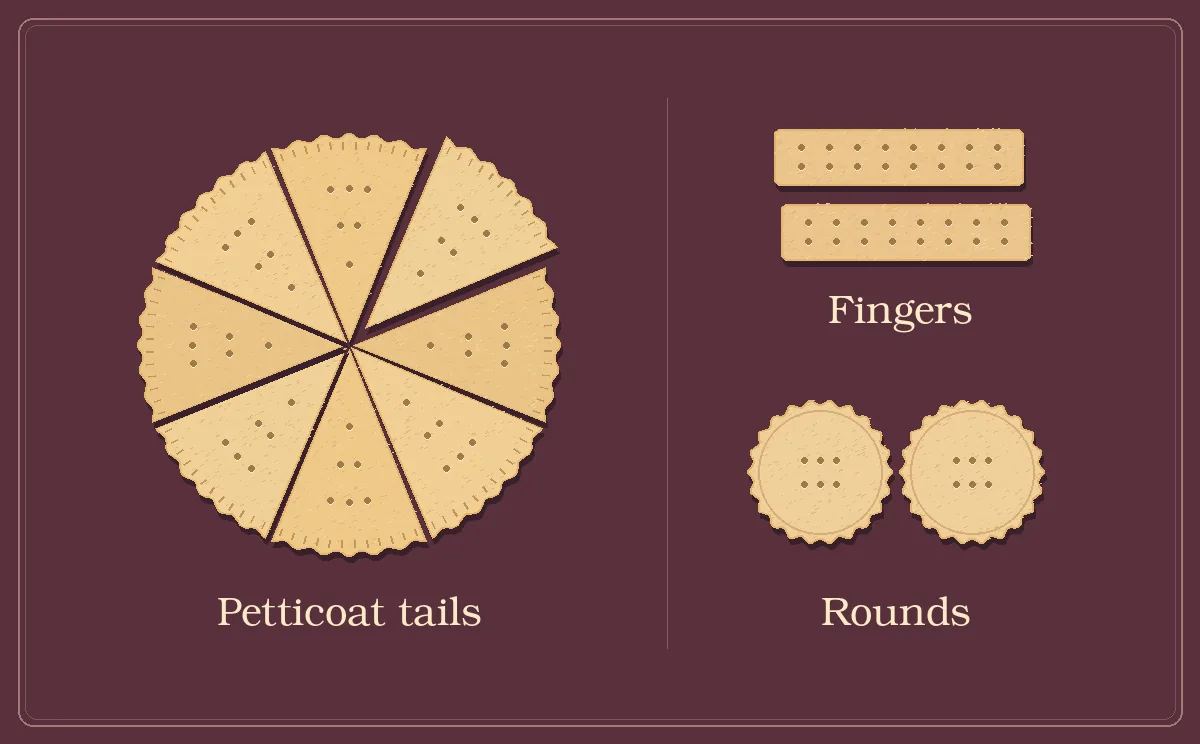
Scottish shortbread is traditionally shaped into fingers, rounds or petticoat tails, the wedges of one large round. Local bakers also found character in a particular peel, seed or grain. Read Weston Museum’s account.
Perthshire
Look for almonds and citron peel in this thick, round shortbread. A Perthshire baker advertised it in 1831. Nearly a century later, F. Marian McNeill recorded a version made with both wheat flour and rice flour.
Dictionaries of the Scots LanguageOrkney
At Barony Mill, Liz Ashworth makes a round biscuit with oats, vanilla and flour milled from bere, a barley grown in Orkney. The barley gives the crumb an earthy flavor that still comes through the butter.
Liz Ashworth, Barony MillLancashire, England
This neighboring biscuit tradition gives the spice cupboard a turn. Slow Food’s account describes plain-cut rounds made with caraway seeds and ground coriander, finished with sugar.
Slow Food in the UKSqueeze a spoonful in your hand. If it holds its shape, press the rest together. Weigh the flour carefully and give cold butter time to work into it. The mixture can look loose until you apply pressure.
For slice-and-bake rounds, cut dried fruit and nuts small and chill the log until firm. A slab is easier to divide while still warm. Follow the resting time for the particular recipe. See the cranberry slice-and-bake method.
The holes give steam a way out, which helps a pressed slab stay flat. For petticoat tails, score the wedges as well so each piece has a clear cutting line. See King Arthur’s pan method.
Use the colored zest for citrus flavor in the dough. Put juice in a glaze for the cooled biscuit. Spread jam or curd on a baked biscuit shortly before serving if you want to keep the snap.
Let it cool fully, then seal it in a tin or airtight container. For plain, unfilled shortbread, King Arthur gives up to a week. Keep unfilled biscuits separate from soft fillings and add those when you serve. Storage guidance.
It is a tray bake with a biscuit base, a caramel middle and a chocolate top. The shortbread supports the softer layers, so it is served in small squares. See the layered recipe.
A fragrant sandwich for a sharp stone-fruit preserve.
A crisp almond finger to break into a spoonful of lemon cream.
The biscuit becomes the base beneath strawberries and pastry cream.
Use the nut-studded biscuit as a crunchy side for the mousse.
The references below cover the basic dough, regional bakes and specialist recipes. The flavor combinations and serving notes above are Do Me a Flavor suggestions.